Have you always wanted to start your own business?
The idea came about in October 2019, and the project was launched in November 2020. After spending nearly 10 years working in the fashion industry, I returned to the city where I was born, Madrid. With my experience in the industry,my consumption habits have changed, and so has my perspective on the textile world.
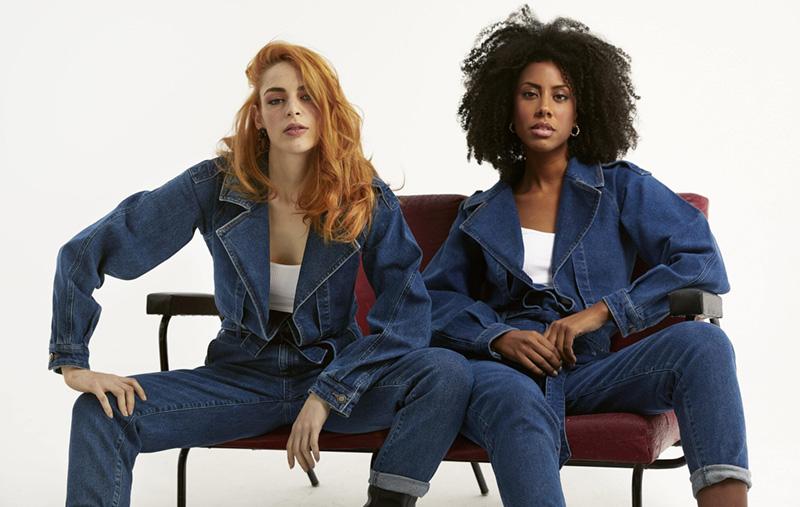
I had been wanting to start my own business for years, but I couldn't settle on any idea. My personal drive to createsustainable jeans with their own unique stylewithin a responsible framework—and to usetechnologyasakey tool to bring this idea to life in a sustainable way—led me to choose Bluyins.
How did the idea come about?
I saw that there weremany of us women who spent years searching for the perfect pair of jeans—ones that would make us feel special and become the go-to staple in our closets. I realized that, sometimes, it was hard to find, so I decided to give it a shot. I was making progress when the pandemic hit.
Like many others, it held us back in countless personal and professional projects in one way or another, but I always knew thatif you try to wait for the perfect moment to do something, you’ll never find it. Some of my friends and family asked me, with all their love, “Bea, are you really going to take the plunge and start selling sustainable jeans online right now, given the way things are?” Don’t ask me why, but I always saw this moment as an opportunity rather than a stumbling block. I had confidence in the idea and in the way I wanted to convey it.
Sustainability is one of the company's core values. How does Bluyins approach this issue?
I knew for sure that one of thefundamental pillars of my brand had to be sustainability. Within the fashion industry (the second most polluting industry in the world),jeans are the most polluting garment, due to the staggering amount of water, energy, chemicals, and other toxic substances used in their production (to give you an idea, on average, 80 liters of water are used per garment).
The technology used in the production process of these sustainable jeans and theEIM SCORE(Environmental Impact Measurement) developed byJeanologia, our trusted partner, help us reduce the environmental impact of our garments.
How does that technology you're talking about work?
On the one hand,textile technologyhas helped us replace polluting processes at every stage of jeans manufacturing with processes that have a reduced environmental impact. For example, alasermachine replaces the manual sanding of the garment (which, in traditional processes, is used to achieve that washed-out or worn-in look on jeans). Another example: to remove various substances from the garment (the de-sizing process), we useozoneinstead of vast amounts of water and chemicals.
With all of this, and throughe-flow technology, we’ve managedto combine comfort, sustainability, and technology,saving a great deal of time, water, chemicals, and energy—and, most importantly,reducing employees’ exposureto high temperatures, toxic substances, long wait times, and countless respiratory and joint-related illnesses.
In addition, we useEIM SCORE, softwarethat measures water, chemical, and energy consumption, as well as worker health in production processes and how these factors affect our ecological footprint. By measuring our current impact, we identify areas for improvement and define future actions, monitoring the entire process to become more sustainable. Without measurement, there is no improvement!
Also, Bluyins is committed to “Made in Spain”—does that mean all production takes place in Spain?
That's right—we produce our jeans in San Sebastián de los Reyes, working side by side with our artisans.We're committed to supporting traditional local manufacturingand promotingitthroughout Spain and around the world through our sustainable jeans and other denim garments. Our main goal is to create collections that strike the right balance between comfort and design.
So, what is that production process like?
In a way, the process of creating and designing sustainable jeans, right up to their final production, can be summarized as follows:
First, we asked our #denimlovers community what they expect from us in the upcoming collection, what denim pieces are missing from their closets, and we sought their input on any questions we had regarding patterns, colors, and designs…
Second, I meet with my designer, María Castellano, and webrainstorm ideas about the themewe’d like to choose for the new collection and thenumber of pieces it will include. The next step is to select which pieces to include and what their designs will be. To do this, we love immersing ourselves in the world around us: drawing inspiration from art, street culture, small shops, flea markets, and everyday people. We’re part of a community passionate about living, doing, and feeling the things that inspire us. We attendtrade showsand soak up therunway showsto get a good sense of the trends we absolutely want to incorporate into our designs.
Once we have a clear idea of which garments to produce and their specific details, we select the fabric, wash, yarn counts, buttons, and labels, and begindeveloping prototypesuntil we arrive at thefinal, definitivesample. From there, we move directlyinto theproduction process.
One of the ways your business model differs from that of other jeans brands is the option to rent clothing. Do you think clothing rental is a new business model that’s here to stay?
Of course! For just over two weeks now, we’ve been offering the option to enjoy all Bluyins clothing through a rental program. We wanted to join the ranks of brands that believe in this model of consumption; we wanted to offer our customers the wonderfulopportunity to make no long-term commitments and to refresh their wardrobes in a circular and responsible way.
Years ago, I read about how some Nordic brands were starting to rent out clothes, and I wondered if this newsubscription-based fashionmodelwould stand the testof time. Honestly, as a consumer, I didn’t quite understand it—it even struck me as a bit controversial. How am I supposed to rent clothes the same way you rent a car?
One person’s waste can be another person’s raw material—that’s what circular fashion is all about. But there’s no doubt thatit’s all of us, as consumers, who need to evolve and embrace this change sothat we can adopt new habits of conscious consumption.
Today, not only am I convinced that this business model is here to stay, but I also wholeheartedly support this way of consuming fashion—not just for an event or a special occasion, but for everyday wear, such as a pair of sustainable jeans.
Speaking a bit about your previous experience, you worked at two of Spain’s best-known fashion companies: INDITEX and LOEWE. What lessons did you learn from working at both a luxury brand and a fast-fashion company?
She was fantastic in both; every professional experience brings countless learning opportunities and a wealth of emotions.
I spent one year at Loewe; I started as an intern in the purchasing department while pursuing my master’s degree at ISEM. Without a doubt, my experience in the luxury sector taught me firsthand just how important it is to pay the utmost attention to every detail; how wonderful it is to work alongside master artisans who know the materials and fabrics inside and out, and the best way to work with them to create an exclusive, one-of-a-kind, and durable product; and the value of the “Made in Spain” brand around the world.
Shortly thereafter, Inditex gave me the opportunity to start my career in fast fashion. I didn’t think twice—I packed my bags and headed to Arteixo, not knowing what my professional future held, but filled with enthusiasm and excitement at the prospect of working for the company I’d dreamed of since I was a little girl.
The experience couldn't have been better. After almost four years, I can say that I'm lucky and that I learned so much… Working in fast fashion gave me experience; it made me realize that, even if you don't have experience, it all depends on you—on the responsibility you're willing to take on and how far you want to go. The company’s flat hierarchy allowed me to quickly take on responsibility and realize that if you want something, you can achieve it—but you have to work for it, prepare for it, advocate for it, and make your case.
For more than two years, I was the manager of Zara Kids in Central America. We opened more than eight stores in four countries and created special collections for these new markets. My last year and a half at the company provided me with a different kind of learning experience: leading a team of 10 people and managing the Zara Kids profit and loss statement across all of Europe. It was, without a doubt, an exciting, all-encompassing experience.
How did your time in the ISEM master's program help you in this professional experience?
In a way,ISEMallowedmeto begin my professional career in the fashion industry by giving me my first experience in the field at a company in the sector, Loewe. The master’s program gave me a comprehensive overview of fashion in its broadest sense, from raw materials to the sale of the product in stores.
ISEM helped me realize that, in the fashion industry, we don’t just find beautiful dresses in store windows—there’s so much more behind the scenes. It helped me learn how to work as part of a team, organize myself from a management perspective, prioritize goals and meet deadlines, develop my critical thinking skills, effectively manage various sources of data and information, and, most importantly, strive to lead by example through my own behavior.
And when it came time to start your business, did it give you the tools you needed to get your project off the ground?
Of course, the 360-degree perspective that ISEM provides allows you to address all the necessary aspects of starting a business, from logistics to communication to consumer behavior, among others.
Developing a constructive approach to problem-solving is key to entrepreneurship, as is developing strong negotiation skills to reach satisfactory agreements with suppliers or customers, and having the initiative and drive that every entrepreneur must possess. The opportunity ISEM gave us to work on a project for a company in the industry (in my case, Castañer) was crucial for learning and putting everything we’d learned into practice.