Many, if not all, are the sectors that have been drowned by the effects that covid-19 has left in its wake. Moreover, according to the tenth edition of the Veepee Barometer, three out of four fashion companies believe that the impact of this virus has been greater than that of the economy as a whole and predict a very bleak future in the short and medium term. These studies predict that these companies do not believe they will be able to recover from this crisis until 2022.
Likewise, physical stores are losing importance and international expansion is slowing down. The same barometer shows that only 40% of Spanish fashion companies expect an increase in sales abroad this year.
Time to accelerate value chain rethinking
In contrast, and leaving aside these less than optimistic forecasts, there are two sides to every coin. These will be complex times for the industry, but some clarity can be seen behind the storm clouds. Let's talk about opportunities, new lessons, to come out better and stronger when all this stops. At ISEM Fashion Business School, we believe in innovation, in collaborative progress and in creating an ecosystem from which we can all improve and evolve.
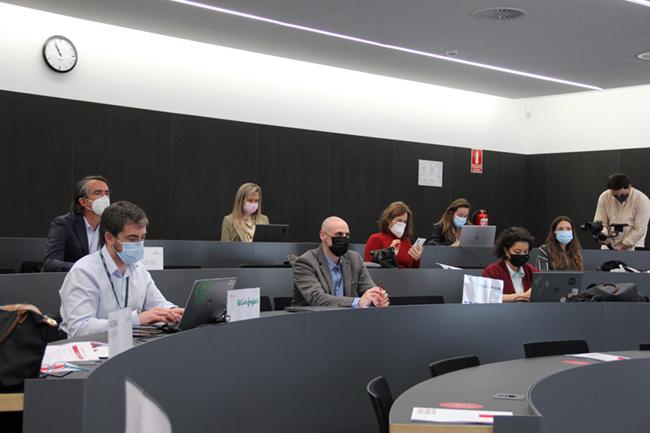
Members of the Atelier by ISEM Ecosystem during the Elevator Pitch of the IV Edition.
"What Atelier brings to these startups is the opportunity to receive support from large fashion companies and that both these and entrepreneurship grow and develop the national economy. To find these disruptive startups that are suitable for the sector requires a good understanding of what retail needs," said Irina Alecha, head of communications at Atelier by ISEM.
The term 'Fashion 5.0' is well known, in which the development of new skills and the change of mentality will be what gives companies the push they need on their way to a successful transformation. This is where technology plays its role and creates the need to invest in automation and digitization processes. All to accelerate the rethinking of the value chain of the fashion industry. Clear examples of this can be seen in TENDAM. The Spanish retail company that encompasses the commercial brands Pedro del Hierro, Women'secret, Cortefiel, Springfield and Fifty, is committed to a more responsible and sustainable supply chain. El Corte Inglés is not lagging behind in this type of strategy and only three years ago invested 100 million in technology. Mango has also dared to counteract this situation with a commitment to innovation by launching its second collection of garments made from smart materials. It is also worth mentioning the digital transformation that Desigual has undergone in its stores, adapting them to new customer demands.
This year more than ever we have joined forces and we already have the collaboration of 13 fashion companies in this new edition. In addition, another of the key pillars of this accelerator is Accenture, a metapartner that since the first edition makes up the Atelier ecosystem and develops personalized mentoring for startups in the specialized areas considered most useful.
"Developing analytical engines for trend identification, cost orientation and risk quantification is one of the ways to counteract this," says Clara Jiménez, innovation director at Accenture.
What is clear is that the path towards a new mixed system or smart sourcing is already a reality today and a return to the old model is far from the sector's sight.