Architect Javier Carvajalestablished one of the earliest and most successful partnerships between architecture and fashion companies.His projects for Loewe went beyond the design of the stores themselves, extending to every aspect of the brand. He designed 13 stores, 11 of them in Spain and 2 in London. The new approach permeated Loewe’s entire structure,influencing the creation of a new brand identity linked to the brand’s craftsmanship and expertise, as well as to the Spanish image.
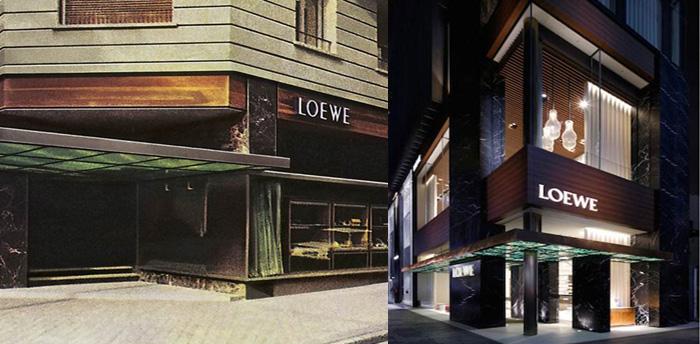
Today, the project is still alive, with Carvajal’s work being revived as a reflection of Loewe’s golden age. Thus, in late 2013,Jonathan Andersonarrived as the new creative director, proposing to give the brand“a fresh injection of modernity and cultural awareness.” To that end, the designer proposed undertaking an initiative similar to those of the 1950s, 1960s, and 1970s. Anderson’s project aims to redefine the brand’s entire identity, based on a reexamination of the contributions of that era on various levels.
Architecture and Fashion
Architecture has always been captivated by fashion and, at the same time, has resisted it.The connection between fashion and architecture has been very close. For a long time, fashion designers have turned to architects to enhance their brands’ image, and, in turn, architects have viewed these projects as small testing grounds.
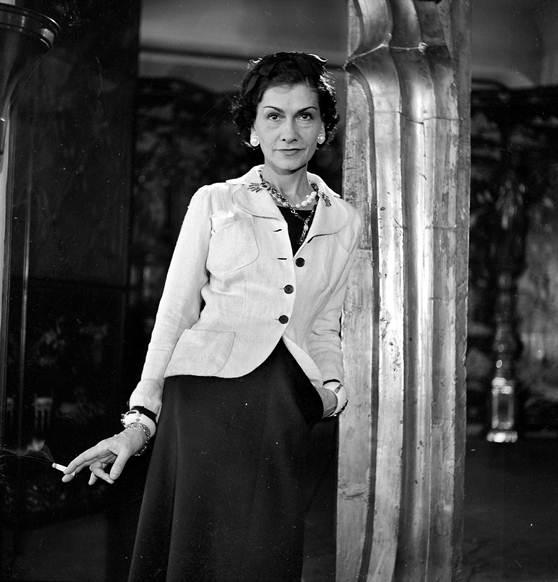 The designer summed up the connection between these two disciplines Coco Chanel in his statement: “Fashion is architecture; it’s a matter of proportions.”
Buildings and clothing are the envelopes that allow us to interact with the world around us.Architects and fashion designers follow similar design processes, in which they share similar techniques and materials. Both work with scale and geometry, texture, color, and ornamentation, as well as volume and negative space, and both are increasingly turning to technology.
We have reached a point where fashion designers are creating architectural designs and architects are designing fluid buildings. Two concepts that are used interchangeably, searching for that connection and inspiration transcending what was conventionally considered to belong to the other.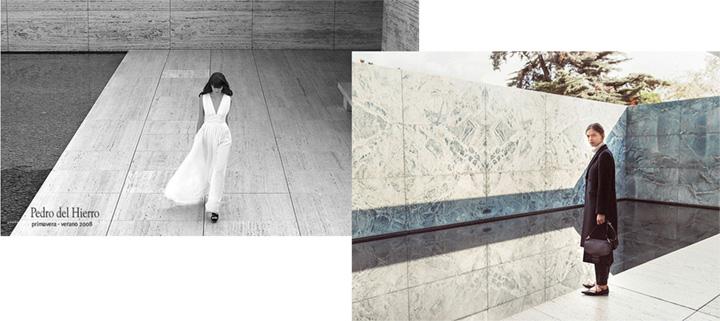
"Architect" Designers
There are many connections between fashion designers and architects. Among them are fashion designers whose creations resemble works of architecture.
The most important fashion designer our country has ever produced,Cristóbal Balenciaga, was known as“the architect of haute couture.” Thetechnicalskilland perfection with which he developed the patterns for his impeccable designs earned him this nickname, bestowed upon him by his fellow designer,HubertdeGivenchy.
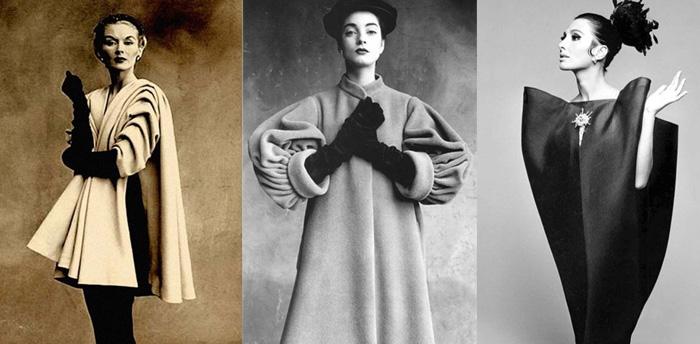
The architectural nature ofBalenciaga’sfashion is most evident in the sleeves, the precise cuts, and the invisible seams of his creations. Cristóbal himself said it best when asked about the qualities a fashion designer should possess:“A couturier must be an architect of patterns, a sculptor of forms, a painter of color, a musician of harmony, and a philosopher of proportion.” He met all these requirements.
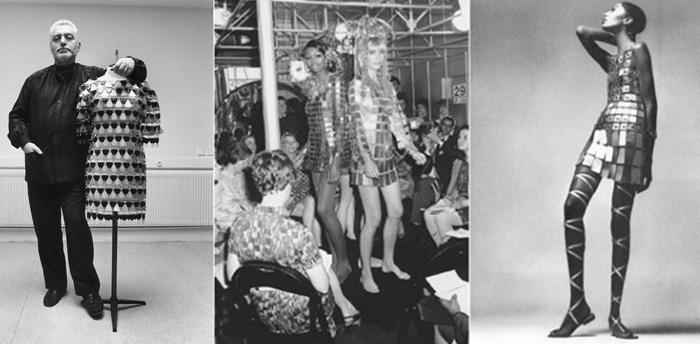
“I studied architecture for 10 years. But at the same time, I was already drawing lots of objects and fashion accessories. During my architecture studies, I learned drawing, perspective, precision, and how to work with volumes; and my mother, who was a seamstress at Balenciaga, taught me how to construct a garment just by looking at it. That’s how I moved from architecture to fashion by synthesizing the two,” saidPaco Rabanne.
Her dresses were groundbreaking at the time because of theirmateriality—small, three-dimensional geometric pieces—and their construction, which featured connections made with chains, with experimentation serving as the foundation.
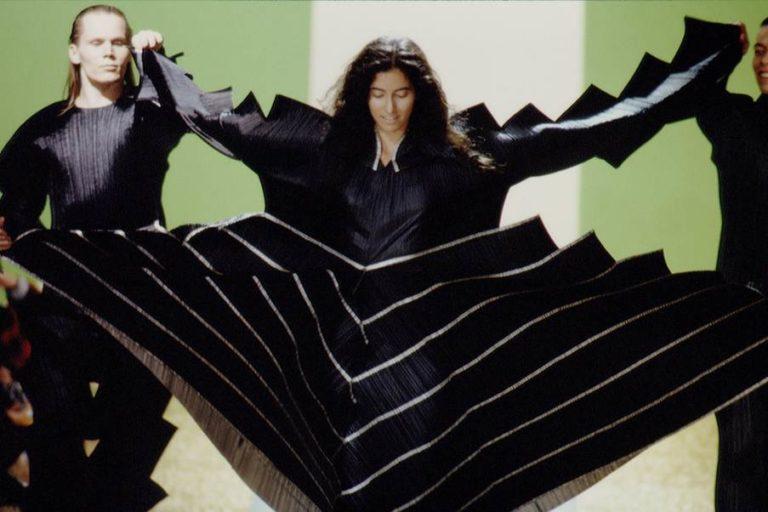 Issey Miyake He is considered much more than just a designer or creator. Those who have studied his work say that he is a a master of geometry, a designer of dresses, and an architect of purity.
Architects Who Design Clothing
Associated with femininity, frivolity, and irrationality—with the illusory and the sensory—fashion has taken over all the values that modern architecture sought to do without. However, figures such asFrank Lloyd Wright, Otto Wagner,and Henry Van deVelde designedclothing for their wives at a time when architecture and fashion were closely linked within European avant-garde circles.
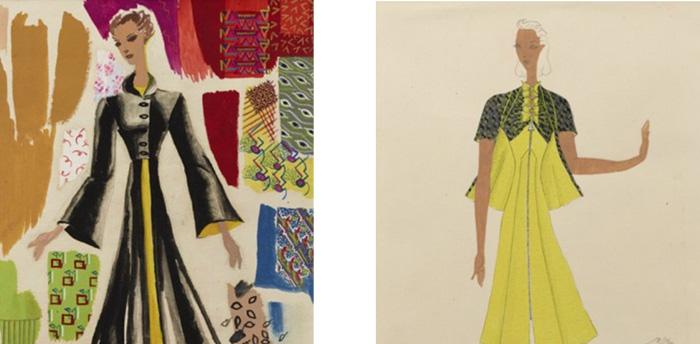
Fashion captivatedRay Eamesfrom a very young age. She designed textiles and clothing for herself and her husband, as well as uniforms for the staff ofthe IBM Pavilion during the 1964 New York World's Fair.
Zaha Hadid's collection for the Swedish jewelry brandGeorg Jensen includesfive rings and three bracelets that translate Hadid's architectural vision into fluted pieces. She drew inspiration from the towers she designed in China.
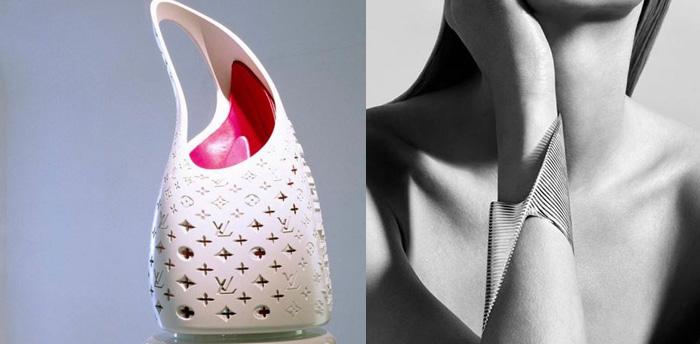
In 2006, he reinterpreted the French fashionhouse’siconic“bucketbag”for theEspace Louis Vuitton exhibition. The bag he designed was made of plastic and featured the brand’s logo embossed on it.
For theMelissa footwearbrand,she transformedthe spirit of a building into a plastic shoe. She created a futuristic design that adapted to the shape of the foot, blending the body and the shoe.
Alvarnoand theVaillo Irigaraystudio created micro-architectures adaptable to human needs, in such a way that women become the architects of their own living spaces.
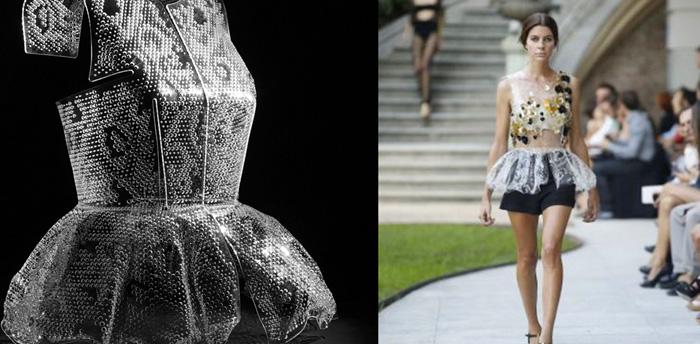
Architecture for Fashion
This unbreakable bond between fashion and architecture has been reflected not only as a source of inspiration butalso in the designs of brick-and-mortar stores. The most exclusive fashion brands have enlisted the most prominent architects and interior designers to develop their spaces.
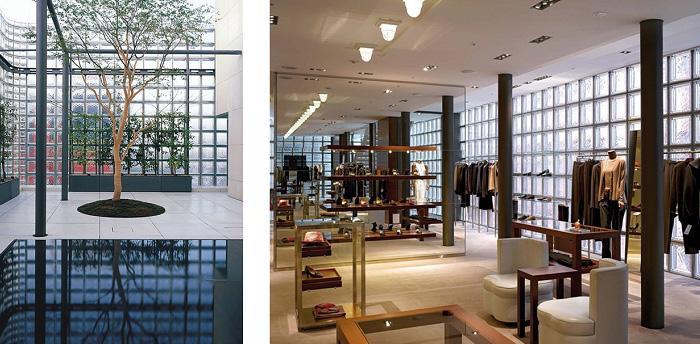
According to Piano, the concept behind theHermèsbuilding in Tokyo was to turnitinto a sort of“magic lamp” inspiredby Japanese paper lanterns. To achieve this, he covered the45-meter-high facade with a grid of13,000 translucent glass blocksspecially manufactured for this project.
In 1999, thePradaGroup launched a new experimental project, Prada Epicenters, in collaboration with architect Rem Koolhaas and the Swiss architectural firmHerzog & De Meuron.
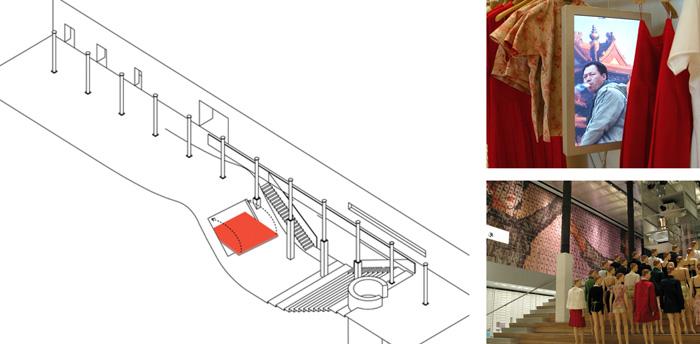
Prada commissioned a study to analyze emerging trends in international shopping and to develop new tools to streamline sales processes. The three Prada Epicenters were conceived as testing labs where new ways of shopping could be explored. The result was the introduction of innovative exhibition systems, projections, and spaces capable of hosting concerts and all kinds of public events.
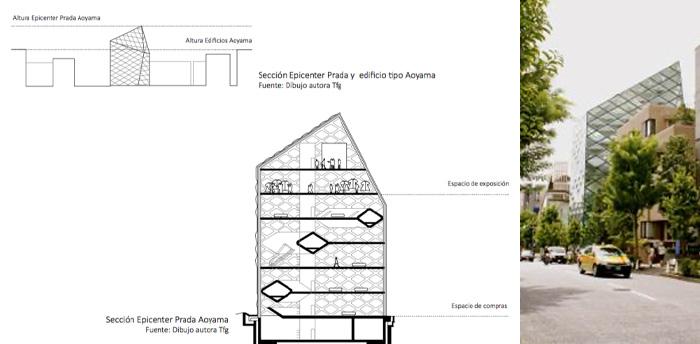
The Prada store is the epicenter of Tokyo’s Aoyama fashion district andJapan’slargestflagshipstore, designed by the Swiss architectural firm Herzog & de Meuron.The sculptural nature of this building is evident in its exterior cladding, which consists of concave, flat, and convex glass panels.
“These different geometric shapes create soft reflections that allow the observer—whether inside or outside the building—to see, at all times, ever-changing images and almost theatrical perspectives of Prada’s products, the city, and themselves.”
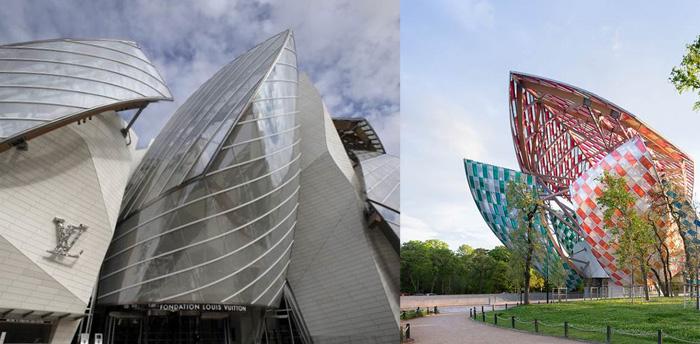
Gehry’sLouis Vuitton Foundationbuilding, constructed on the edge of a water garden created specifically for the project, consists of a group ofwhite blocksclad in fiber-reinforced concrete panels,surrounded by twelve immense glass “sails” supported by wooden beams.